.png)
The Manual of Me: Why Inclusion for Neurodiverse Teams Only Works When It's a Two-Way Street

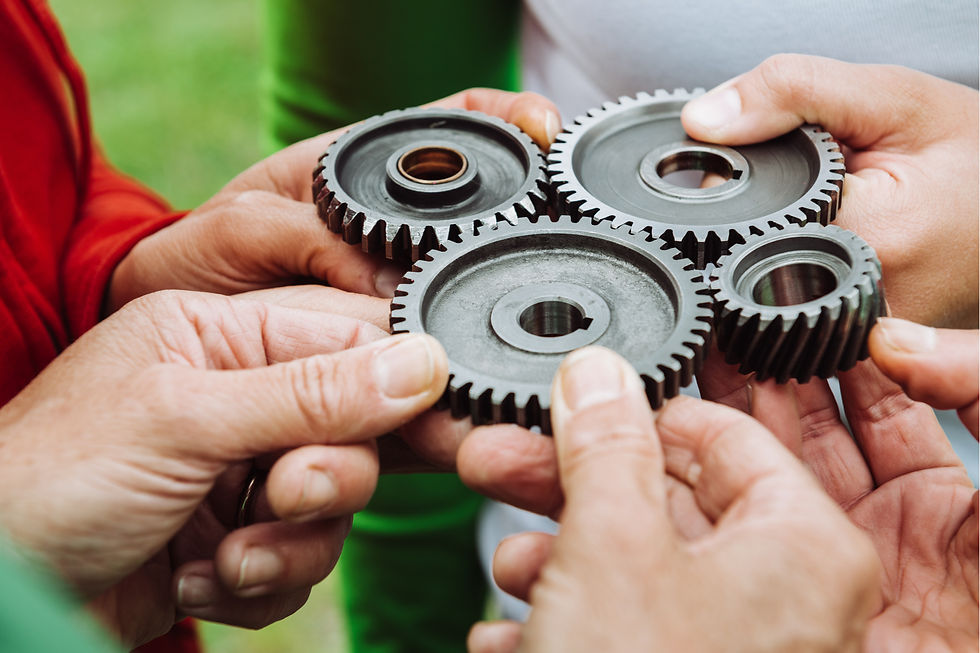
Leadership and HR are having a conversation right now about neurodiversity at work, and as we move from stage 1 of educating ourselves on neurodiversity, we're quickly maturing into how to make it work for everyone. For years the narrative was awareness: understand the conditions, run the training, tick the diversity box. That era is ending. The organisations getting real value from neurodivergent talent have moved past awareness into something harder - mutual accountability, where both management and the individual own a clearly defined half of the deal.
As a coach who works with leadership teams navigating exactly this territory, I see organisations really gaining traction in performance as they get more right than others who are still at the start of the conversation.
Half One: Management's Obligations Are Not Optional Extras
Roughly one in five people is neurodivergent. If you lead a team of any size, you are already leading neurodivergent people - whether or not anyone has disclosed it. Recent research from CIPD found that nearly half of neurodivergent professionals feel their differences are viewed negatively at work, and more than a third of neurotypical colleagues admit they don't know how to work effectively alongside neurodivergent peers. That gap isn't a personality problem. It's a management capability gap.
In the UK, neurodivergent conditions frequently meet the legal threshold for disability under the Equality Act 2010, which means reasonable adjustments aren't a nice-to-have - they're a duty. But the more important shift for leaders isn't legal; it's practical: most of what gets labelled a "performance issue" in a neurodivergent employee is actually a translation problem. Vague instructions, disorganised meeting notes, ambiguous feedback, unclear expectations - these create friction for a neurodivergent brain long before any question of capability arises. Coaches working in this space describe the same pattern repeatedly: what looks like inconsistency, lateness, or a "bad attitude" is often unmanaged overwhelm meeting a system that was never designed with that person in mind.
So what does management actually own?
- Explicit, unambiguous communication. Say what you mean, put it in writing, don't expect the subtext to land.
- Real adjustments, not gestures - flexibility on environment, working hours, meeting format and how feedback is delivered.
- Early, low-stakes conversations before anything becomes a formal process. Once someone is in a disciplinary or capability procedure, stress rises, performance often drops further and the whole situation ramps up.
- Manager literacy - You don't need a clinical understanding of ADHD or autism, but you do need enough working knowledge to tell the difference between a genuine barrier and a behavioural choice.
- Psychological safety to disclose. Many neurodivergent employees stay silent about their needs because they fear being seen as making excuses or being penalised for asking. If your team doesn't feel safe naming what they need, you'll only find out when something has already gone wrong.
None of this is about lowering the bar. It's about removing barriers that have nothing to do with someone's ability to do the job well.
Half Two: The Individual Owns Their Manual of Me — and Their Behaviour
This is the half that gets far less chat, and it's where I think coaching has the most to offer.
A "Manual of Me" (also called a Personal User Manual, Work Blueprint or User Guide to Working With You) is a simple, structured document an individual creates to explain how they work best: communication preferences, what triggers stress, how they like feedback delivered, what conditions help them do great work. It started in tech culture and has spread widely because it works - and crucially, it isn't just a neurodiversity tool. Everyone benefits from writing one; it just tends to matter more for neurodivergent employees because the gap between "how I actually work" and "how the workplace assumes people work" is wider.
But here's the accountability piece that's easy to skip past: a Manual of Me only works if the individual actually does the work of writing it, keeps it current and uses it proactively - rather than waiting for a crisis and then reaching for a diagnosis as an after-the-fact explanation. Self-awareness is a discipline, not a document you fill in once. Part of what I coach clients on is exactly this: building the habit of naming your needs before they become incidents, not after.
The second, more uncomfortable part of this half is boundaries. A neurodivergent diagnosis provides context. It does not provide immunity. This distinction has become sharply visible in recent workplace disputes - for example, when an employee first discloses an autism diagnosis during a misconduct investigation and then argues that the diagnosis should have changed the outcome. Employment specialists writing on this in the past year have converged on the same line: neurodivergence can explain why certain behaviour happened, but it does not excuse behaviour that harms colleagues or crosses professional boundaries. A tribunal considering exactly this kind of case found that while an employee's disability context mattered, it didn't override the employer's duty to protect other staff from harassment.
For the individual, real accountability means:
- Owning and maintaining your Manual of Me- proactively, not reactively.
- Asking for what you need, specifically rather than expecting people to infer it.
- Distinguishing, honestly, between "I can't" and "I don't want to." This is hard, and it's exactly the kind of self-honesty good coaching builds.
- Taking ownership of impact, not just intent. Neurodivergent or not, if your behaviour lands badly on colleagues, that's yours to address - even if the cause is understandable.
Where the Two Halves Meet
The most effective model I've seen described in practice and the one I use with clients is dual coaching: support for the individual and support for the manager, running in parallel, so neither is left carrying the whole weight of getting this right alone. A brilliantly self-aware employee still struggles if their manager can't adapt communication style. A deeply well-intentioned manager still gets it wrong without guidance on what "reasonable adjustment" actually looks like day to day.
Accountability, done properly, isn't punitive. It's corrective, mutual and ongoing. It asks management to build the conditions for people to succeed, and it asks individuals to name what they need and own how they show up. Get both halves right, and neurodiverse teams don't just avoid friction; they outperform on creativity, precision and problem-solving, which is the actual business case that too many organisations still skip past on the way to a training slide.
Sources: CIPD & Uptimize (2024) https://www.uptimize.com/cipd-uptimize-neuroinclusion-at-work


Comments